Social Media Scams: The Next Dark Whole may Target You
Social Media is one of an integral part of our daily lifestyle. No matter wherever we are; we are always connected with any of the social media channel. We share our feeling of each moment and day-to-day experience with friends, family and loved one. We share photos with family members, catch up with friends, and get the recent update. Despite these opportunities, social media also has risks: it has become a tool used by scam practitioner to take advantage of people.
Most Prevailing Types of Social Media Scam
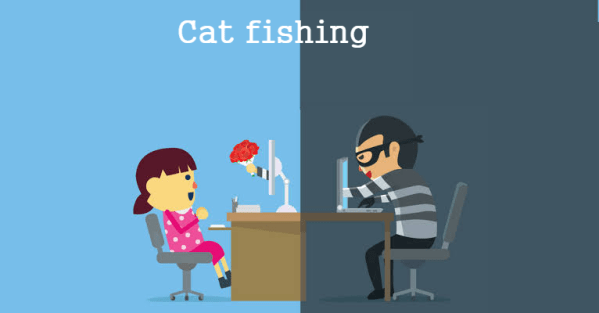
1. Cat-fishing
Cat-fishing is an internet scam in which a cyber-criminal makes a fake online profile to allure a victim into a fictitious online relationship — for the most part, to get money or different benefits from the victim.

2. Profile Hijacking
The Facebook profile commandeer is another interpretation of utilizing a fake profile for accursed methods. For this situation, cybercriminals regularly utilize the properties and subtleties of real people — like their photos, old neighborhood and occupation — to set up profiles pretending to be that individual.
3. Quizzes May Mine Your Information
Which “Stars Wars” character would you say you are? What city would you say you were intended to live in? Which big name is your perfect partner? Sound recognizable? These are for the most part popular quizzes that have been broadly shared on Facebook, entreating users to take a couple of moments for what appears innocuous enjoyment.
However, the Better Business Bureau (BBB) cautions that some quizzes are intended to steal your information in an out and out scam.
4. URL-Shortening Cons
While URL shorten are valuable for sharing a website link inside a tight character limit, for example, Twitter, they can likewise be utilized to cover a malicious page.
5. Money-Flipping
Money-flipping is a developing financial scam on Instagram and other social media channels. Criminals try to blackmail money from users by persuading them to make a bum investment.
How to Deal with Social Media Scam?
1. Never click on pop-up messages, posts that contain content that appears to be stunning, shameful, or unrealistic, or links or attachments in spontaneous emails and instant messages.
2. Make a strong password. This implies it is at least seven characters and contains a blend of upper and lower case letters, symbols, and numbers. You ought to never give your password to somebody you don’t have a clue.
3. Try not to give your information (personal or financial) online except if you know the website you are utilizing is genuine, secure, and scrambled. It is additionally essential to ensure that you are managing the correct entity and utilizing its real website and not a clone web page made by a trick specialist. Additionally, search for “https” before a web address.
4. Delete spontaneous emails and instant messages that solicitation personal or account information. Companies you work with as of now have this information and don’t have to check or affirm it. In the event that there is a security breach, most companies contact their clients recorded as a hard copy to alarm them of the breach.
5. Contact companies just through confided in channels. In the event that you are worried about an email or other message you got, call the company quickly at its publicly-recorded phone number. Never trust the phone number or email address given in the message.
6. Add total security antivirus to your device to trace the suspicious activity.
7. Try not to be raced into sending cash quickly or secretly. Try not to send cash by wire transfer, medium-term conveyance, or re-loadable cards except if you are sure beyond a shadow of a doubt that you are sending cash to a real companion or family member.
 Techno Boost