7 Types of Hacker; Who’s Good & Who’s Bad

Hacking has now created to be a solid area in the field of software engineering. Not just it has advanced from an arbitrary propensity to a lifelong way, yet the measure of innovative work raised it to the status of a whole industry. This has empowered the development of only one hacker type, into various; all in various bearings and sorts of hacking.

7 Types of Hackers

1. White Hat Hackers

First up, we have the ideal sort of hacker to break the generalization. The white hat hacker is a hero, as unexpected as it might sound. White Hackers, white hat hackers or ethical hackers are the individuals who test existing internet foundations to explore escape clauses in the framework. They make calculations and play out numerous procedures to break into frameworks, just to reinforce them.

Think about this as a lockpick, who might work his way around locks, just to advise the proprietors regarding how to make the locks work better.

Renowned white hat hackers have generally been urgent in guaranteeing that huge organizations keep up a solid system structure with the goal that it is unbreakable against every other sort of hacking. From being representatives of the Government to being private ad-visors, white hackers assist internet with being a superior and more secure spot.

2. Black Hat Hacker

Assuming acknowledgment for the contrary persona around “hacking,” these folks are your culprits. A black hat hacker is the kind of hacker you ought to be concerned. Heard a report about another cyber-crime today? One of the black hat hackers might be behind it.

While their motivation might be financial more often than not, it’s not in every case only that. These hackers search for vulnerabilities in singular PCs, organizations and bank frameworks. Utilizing any escape clauses they may discover, they can hack into your system, breach the internet security and gain admittance to your personal, business and monetary information.

3. Grey Hat Hacker

A grey hat hacker ordinarily has blended aims. As the shading code suggests, this hacker type doesn’t have the well meaning goals of a white hat hacker, nor does he have the evil expectations of a black hacker. A grey hat would break into frameworks yet never for his own advantage. Well known dark hat hackers have abused frameworks just to make the information open, and to bring to spotlight tremendous datasets of information that contains bad behaviors.

This hacker type is the most usually discovered sort on the internet. The most widely recognized break-ins for the most part are of the back and dark hat type, however since there are no significant personal additions with dim hats, black hats take the crown for being the genuine trouble makers.

4. Green Hat Hacker

These hackers are the novices in the online universe of hacking. Think of them as content kiddies yet with a distinction. These novices want to turn out to be all out hackers and are interested to learn. You may discover them immersed in the hacking networks besieging their kindred hackers with questions.

You can recognize them by their flash to develop and get familiar with the hacking exchange. When you answer a solitary inquiry, the hackers will tune in with full focus and pose another inquiry until you answer every one of their inquiries.

5. Red Hat Hacker

Another great hacker type to break the generalization, the red hat hacker acts mercilessly towards black hat hackers. Their sole goal is to obliterate the exertion of each terrible hacker type and to cut their whole framework down. A red hat hacker would be vigilant for a black hat hack, catch it and hack into the black hat hacker’s framework. In addition to the fact that this would halt the attack, yet in addition push the black hat hacker out of business!

6. Blue Hat Hacker

Of the numerous hacker types, the blue hat hacker is the novice. Like content kiddies, the blue hat sends promptly accessible techniques yet explicitly focuses on an element out of an awful expectation. Typically, these are retribution attacks made utilizing novice techniques like influencing a site with a lot of traffic utilizing a content.

7. Social Media Hacker

As its name infers they center around hacking social media accounts by utilizing different techniques. This hacker type is like black hat hacker for their criminal expectations, data theft.

You may regularly run over abused terms of hackers on the internet, for example, the purple hat hacker or the yellow hat hacker, yet the previously mentioned types are the most ordinarily utilized and acknowledged classes in the realm of hacking.

Be Aware of 5 Malware; Your PC may Under Danger

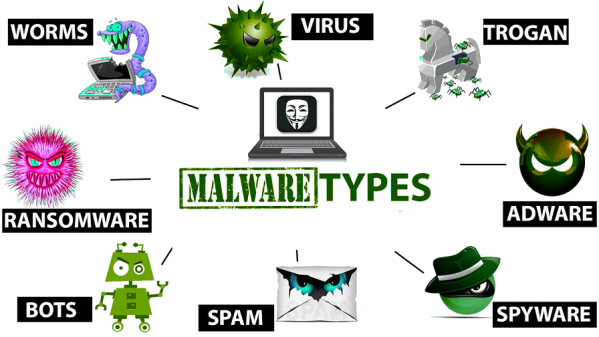
Malware (malicious software), is an umbrella term used to refer to a variety of forms of suspicious or untimely software. Cyber-criminals design malware to settle computer functions, steal data, bypass access controls, and unless cause infliction to the host computer, its applications or data.

Most Common 5 Malware

  • Adware
  • Malvertising
  • Spyware
  • Ransomware
  • Trojans

Adware

The adware attempts to expose the settled end-user to unwanted, probably malicious advertising. A common adware program might redirect a user’s browser searches to look-alike web pages that contain other product promotions.

Malvertising

The malvertising is the use of authentic ads or ad networks to covertly deliver malware to unsuspecting users’ computers. For example, a cyber-criminal might pay to set an ad on a legitimate website. When a user clicks on the ad, code in the ad either redirect them to a malicious website or installs malware on their computer. In some cases, the malware embedded in an ad might perform automatically without any action from the user, a method referred to as a “drive-by download.”

Cyber-criminals have also been known to settle genuine ad networks that deliver ads to many websites. That’s often how popular websites such as the New York Times, Spotify and the London Stock Exchange have been vectors for malicious ads, putting their users in danger.

The goal of cyber-criminals who use malvertising is to earn money, of course. Malvertising can pass any type of money-making malware, including ransomware, crypto-mining scripts or banking Trojans.

Spyware

Spyware is most often practiced by people who want to check on the computer activities of loved ones. Of course, in targeted attacks, criminals can use spyware to log the keystrokes of victims and get access to passwords or intellectual property.

Adware and spyware programs are usually the simplest to remove, often because they aren’t nearly as bad in their intentions as other types of malware. Find the malicious executable and block it from being executed — you’re done.

A much bigger interest than the actual adware or spyware is the device is used to exploit the computer or user, be it social engineering, unpatched software, or a dozen other root exploit causes. This is because although a spyware or adware program’s purposes are not as malicious, as say, a backdoor remote access Trojan, they both use the same methods to break in. The appearance of an adware/spyware program should serve as a warning that the device or user has some sort of weakness that needs to be fixed before real harm happens. Complete Security Software can offer better protection to prevent deadly spyware.

Ransomware

Malware applications that encrypt your data and hold it as hostage waiting for a cryptocurrency pay off has been a huge percentage of the malware for the last few years, and the percentage is still increasing. Ransomware has often crippled companies, hospitals, police departments, and even entire cities.

Most ransomware programs are Trojans, which means they must be circulated through social engineering of some sort. Once performed, most look for and encrypt users’ files within a few minutes, although a few are now taking a “wait-and-see” approach. By watching the user for a few hours before setting off the encryption routine, the malware admin can figure out exactly how much ransom the victim can produce and also be sure to delete or encrypt other supposedly safe backups.

Ransomware can be prevented just like every other type of malware program, but once done, it can be hard to reverse the damage without a good, validated backup. According to some studies, about a quarter of the victims pay the ransom, and of those, about 30 per cent still do not get their files opened. Either way, unlocking the encrypted files, if even possible, takes particular tools, decryption keys and more than a bit of success. The best advice is to make sure you have a good, offline backup of all important files.

Trojans

Computer worms have been renewed by Trojan horse malware programs as the weaponry of choice for hackers. Trojans disguise as legitimate programs, but they include malicious instructions. They’ve been around forever, even longer than computer viruses, but have taken hold of current computers more than any other type of malware.

A Trojan must be effected by its victim to do its work. Trojans usually arrive via email or are forced on users when they visit infected websites. The most popular Trojan type is the fake antivirus program, which pops up and claims you’re infected, then instructs you to run an application to clean your PC. Users take the lure and the Trojan takes source.

Trojans are hard to defend against for two reasons: They’re easy to write and develop by tricking end-users — which a patch, firewall, and other traditional defenses cannot block. Malware writers pump out Trojans by the millions each month.

10 Common Online Threats; the Details is Here

There is no doubt that you need to be careful online. As the World Wide Web has emerged over the years, many online perpetrators have been playing to attack computers and capture sensitive data from individuals. The time we are aware of that is too late to take any preventive.

Whilst the internet is a wonderful place for communication and knowledge. But you may need to dodge many malicious threats along the way.

Common Online Threats:

The list of online threats areas:

  1. Adware
  2. Trojan
  3. Spam
  4. Virus
  5. Rogue Security Software
  6. Key-loggers
  7. Pharming
  8. Spyware
  9. Phishing
  10. Worms

1. Adware

The adware is a type of malware software that represents unwanted ads when a user is surfing online. The ads often redirect your searches to advertising websites and obtain marketing-type data about you, behind your back, which is supposed malicious.

2. Trojan

Trojans leave your computer unprotected, which can mean that hackers can steal any data from your computer. Trojans often introduce themselves as safe computer program so that hackers can enter your computer without being detected.

3. Spam

The case that most of our emails accounts appear with a ‘Spam’ or ‘Junk’ folder refers that spam emails are a huge issue, with more than 50% of emails being siphoned into these folders. Aside from being a nuisance, spam emails are not an immediate threat. However, many can carry malware.

4. Virus

One of the usual talked-about online threats is a virus. Viruses usually attach themselves covertly to downloads as they are designed to spread frighteningly. Viruses are often attached to files for download, shared via CD, DVDs, and USB sticks, or stored on to computers by opening infected email attachments. By using best total security software, this online threats can be obstructed.

5. Rogue Security Software

If you are ever downloading antivirus or anti-spyware programs, make sure you have bought it from a reliable source. Rogue Security Software will often ask you to pay for additional protection, which is a huge fraud. The security software is completely useless and criminals have cheated you of your money.

6. Key-loggers

Key-loggers capture a user’s keyboard activities. Most key-loggers will be looking for distinguishable key entries, such as credit card details and passwords. Key-logging is often associated with identification and intellectual property theft.

7. Pharming

Pharming is a more complicated version of phishing that utilities the DNS system. Pharmers often create web pages copying that of a reliable business, such as an online banking log-in page. Users will then enter their details, considering they are logging in to their typical service, and their details will be stolen by the pharmer.

8. Spyware

The spyware is an encompassing online crime and is usually connected to pop-ups of downloadable files. Once installed on your computer, spyware can monitor your keystrokes, read and delete your files, reformat your hard drive, and access your credentials. Whoever is controlling the spyware has access to your details without your knowledge.

9. Phishing

The phishing is a form of crooked activity. More often than not, official-looking emails are sent representing a well-known service provider, such as a bank. These emails are sent to collect people’s passwords and credit card details.

10. Worms

Worms normally get their way on to a computer via a malicious email attachment or USB stick. Once your computer has been infected by a worm, it will likely send itself to every email address logged in your system. Your email will resemble harmless until they open it and are affected by the same worm.

Tricks to Prevent You from Social Media Scams

Social Media Scams: The Next Dark Whole may Target You

Social Media is one of an integral part of our daily lifestyle. No matter wherever we are; we are always connected with any of the social media channel. We share our feeling of each moment and day-to-day experience with friends, family and loved one. We share photos with family members, catch up with friends, and get the recent update. Despite these opportunities, social media also has risks: it has become a tool used by scam practitioner to take advantage of people.

Most Prevailing Types of Social Media Scam

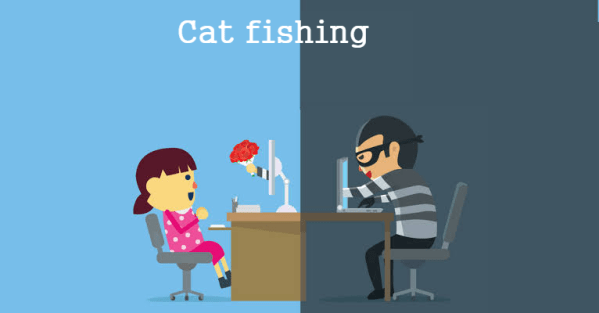
1. Cat-fishing

Cat-fishing is an internet scam in which a cyber-criminal makes a fake online profile to allure a victim into a fictitious online relationship — for the most part, to get money or different benefits from the victim.

2. Profile Hijacking

The Facebook profile commandeer is another interpretation of utilizing a fake profile for accursed methods. For this situation, cybercriminals regularly utilize the properties and subtleties of real people — like their photos, old neighborhood and occupation — to set up profiles pretending to be that individual.

3. Quizzes May Mine Your Information

Which “Stars Wars” character would you say you are? What city would you say you were intended to live in? Which big name is your perfect partner? Sound recognizable? These are for the most part popular quizzes that have been broadly shared on Facebook, entreating users to take a couple of moments for what appears innocuous enjoyment.

However, the Better Business Bureau (BBB) cautions that some quizzes are intended to steal your information in an out and out scam.

4. URL-Shortening Cons

While URL shorten are valuable for sharing a website link inside a tight character limit, for example, Twitter, they can likewise be utilized to cover a malicious page.

5. Money-Flipping

Money-flipping is a developing financial scam on Instagram and other social media channels. Criminals try to blackmail money from users by persuading them to make a bum investment.

How to Deal with Social Media Scam?

1. Never click on pop-up messages, posts that contain content that appears to be stunning, shameful, or unrealistic, or links or attachments in spontaneous emails and instant messages.

2. Make a strong password. This implies it is at least seven characters and contains a blend of upper and lower case letters, symbols, and numbers. You ought to never give your password to somebody you don’t have a clue.

3. Try not to give your information (personal or financial) online except if you know the website you are utilizing is genuine, secure, and scrambled. It is additionally essential to ensure that you are managing the correct entity and utilizing its real website and not a clone web page made by a trick specialist. Additionally, search for “https” before a web address.

4. Delete spontaneous emails and instant messages that solicitation personal or account information. Companies you work with as of now have this information and don’t have to check or affirm it. In the event that there is a security breach, most companies contact their clients recorded as a hard copy to alarm them of the breach.

5. Contact companies just through confided in channels. In the event that you are worried about an email or other message you got, call the company quickly at its publicly-recorded phone number. Never trust the phone number or email address given in the message.

6. Add total security antivirus to your device to trace the suspicious activity.

7. Try not to be raced into sending cash quickly or secretly. Try not to send cash by wire transfer, medium-term conveyance, or re-loadable cards except if you are sure beyond a shadow of a doubt that you are sending cash to a real companion or family member.

My First Blog Post

Be yourself; Everyone else is already taken.

— Oscar Wilde.

This is the first post on my new blog. I’m just getting this new blog going, so stay tuned for more. Subscribe below to get notified when I post new updates.

Introduce Yourself (Example Post)

This is an example post, originally published as part of Blogging University. Enroll in one of our ten programs, and start your blog right.

You’re going to publish a post today. Don’t worry about how your blog looks. Don’t worry if you haven’t given it a name yet, or you’re feeling overwhelmed. Just click the “New Post” button, and tell us why you’re here.

Why do this?

  • Because it gives new readers context. What are you about? Why should they read your blog?
  • Because it will help you focus you own ideas about your blog and what you’d like to do with it.

The post can be short or long, a personal intro to your life or a bloggy mission statement, a manifesto for the future or a simple outline of your the types of things you hope to publish.

To help you get started, here are a few questions:

  • Why are you blogging publicly, rather than keeping a personal journal?
  • What topics do you think you’ll write about?
  • Who would you love to connect with via your blog?
  • If you blog successfully throughout the next year, what would you hope to have accomplished?

You’re not locked into any of this; one of the wonderful things about blogs is how they constantly evolve as we learn, grow, and interact with one another — but it’s good to know where and why you started, and articulating your goals may just give you a few other post ideas.

Can’t think how to get started? Just write the first thing that pops into your head. Anne Lamott, author of a book on writing we love, says that you need to give yourself permission to write a “crappy first draft”. Anne makes a great point — just start writing, and worry about editing it later.

When you’re ready to publish, give your post three to five tags that describe your blog’s focus — writing, photography, fiction, parenting, food, cars, movies, sports, whatever. These tags will help others who care about your topics find you in the Reader. Make sure one of the tags is “zerotohero,” so other new bloggers can find you, too.

Website Powered by WordPress.com.

Up ↑

Design a site like this with WordPress.com
Get started